

Master Zoology with Structured Handwritten Notes
Zoology is a critical subject for NEET. These handwritten notes simplify complex biological processes with diagrams, flowcharts, and concise explanations for easy understanding and quick revision.
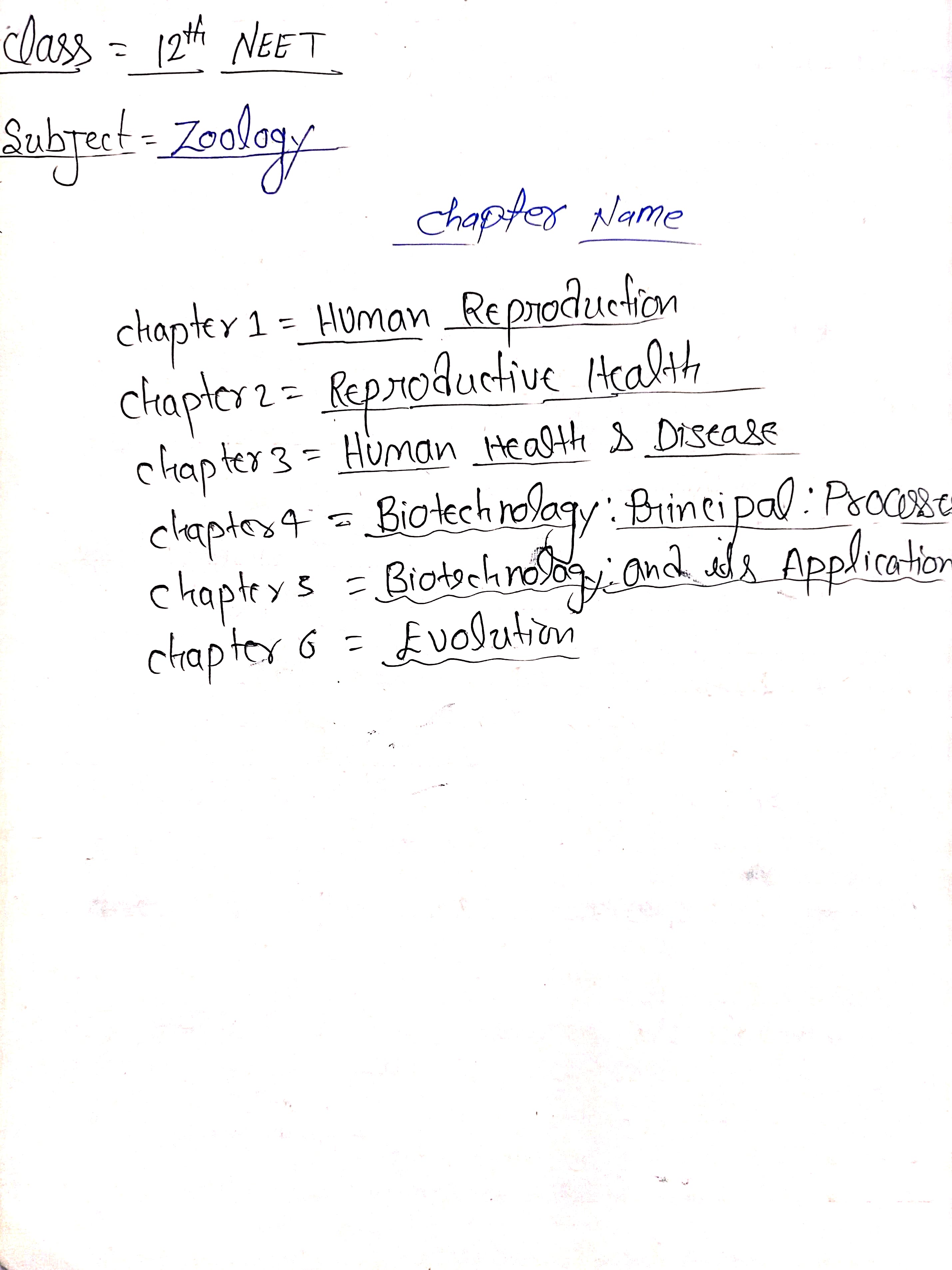
Topics Covered
1. Human Reproduction
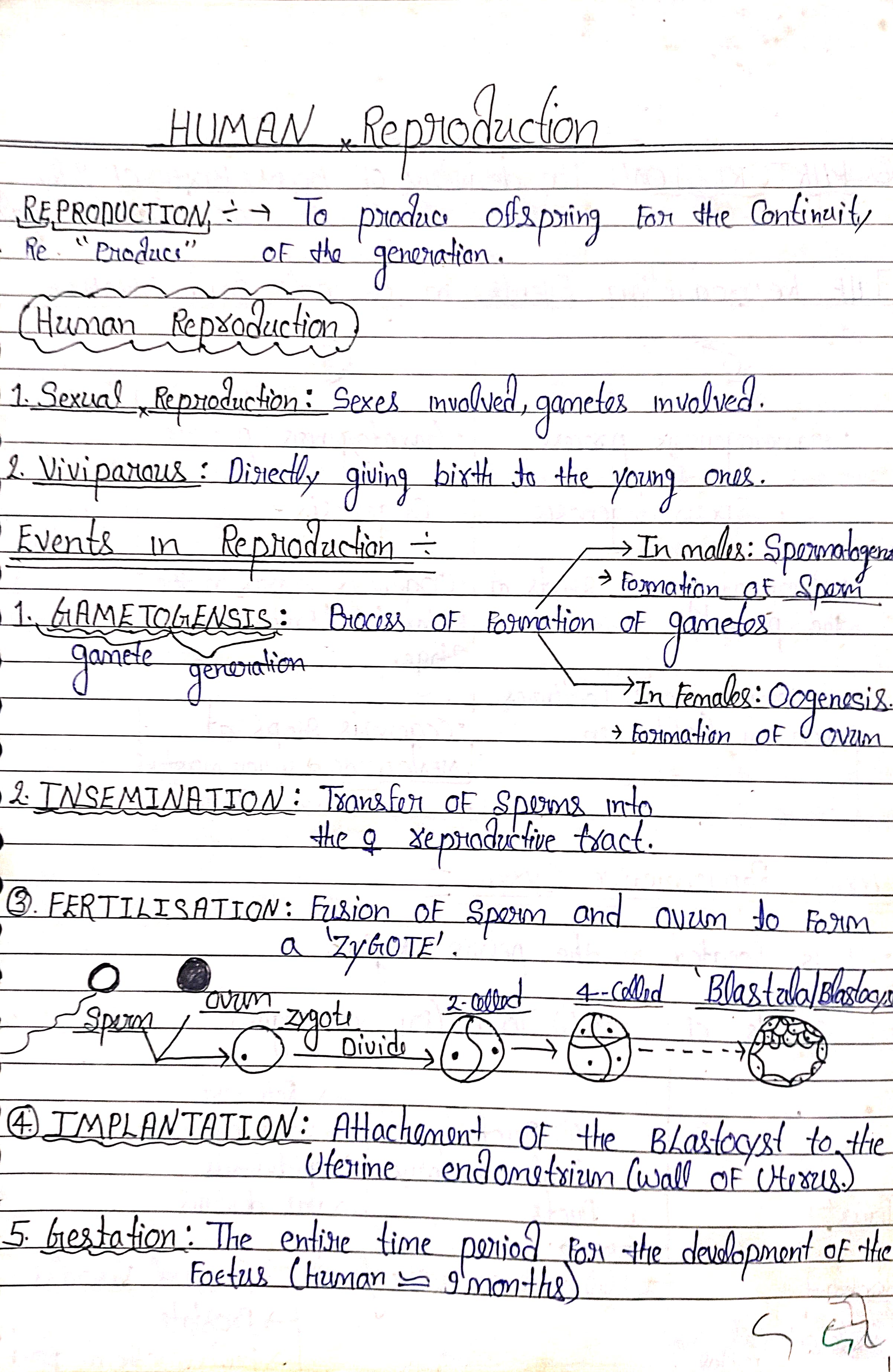
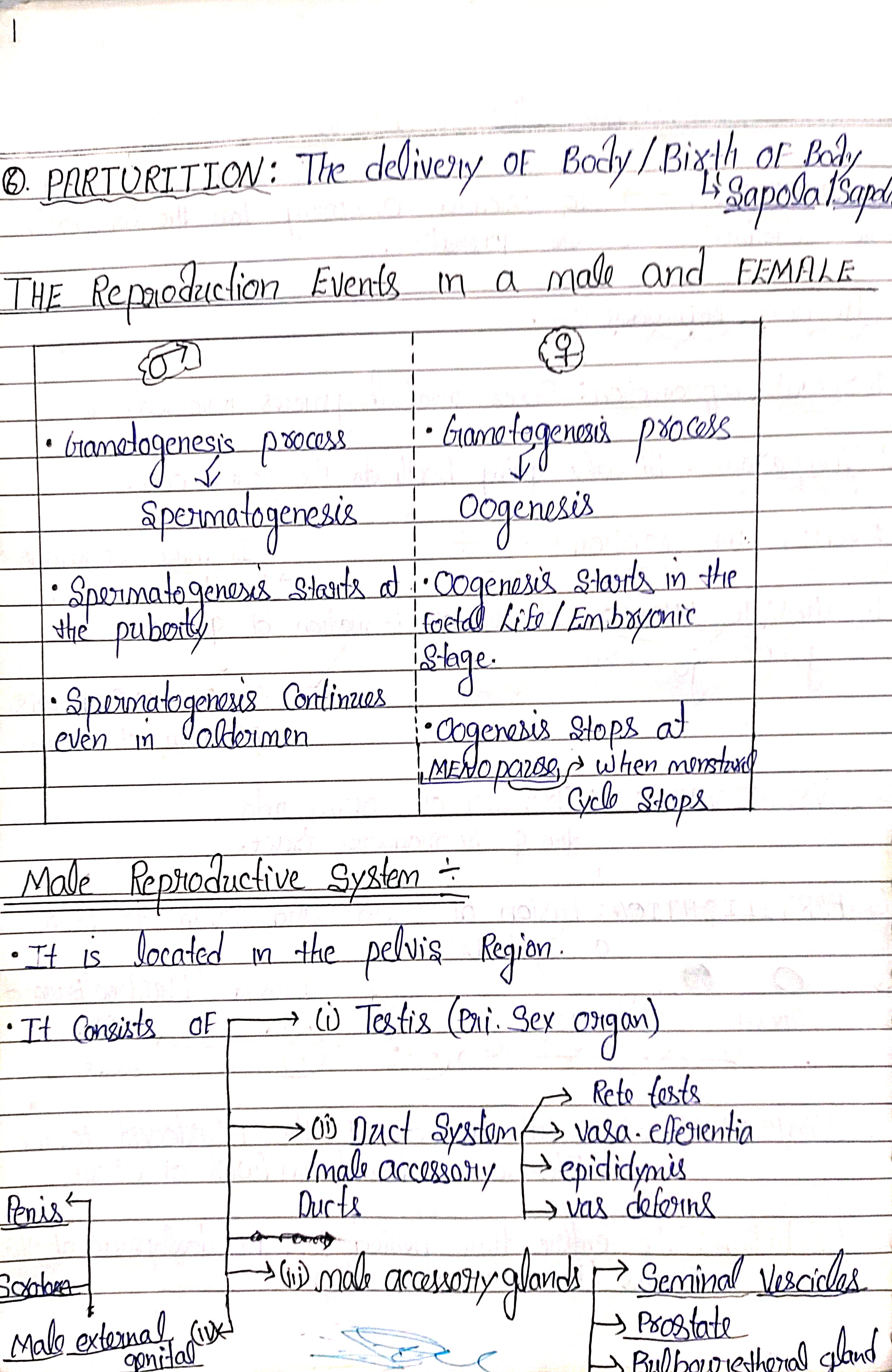
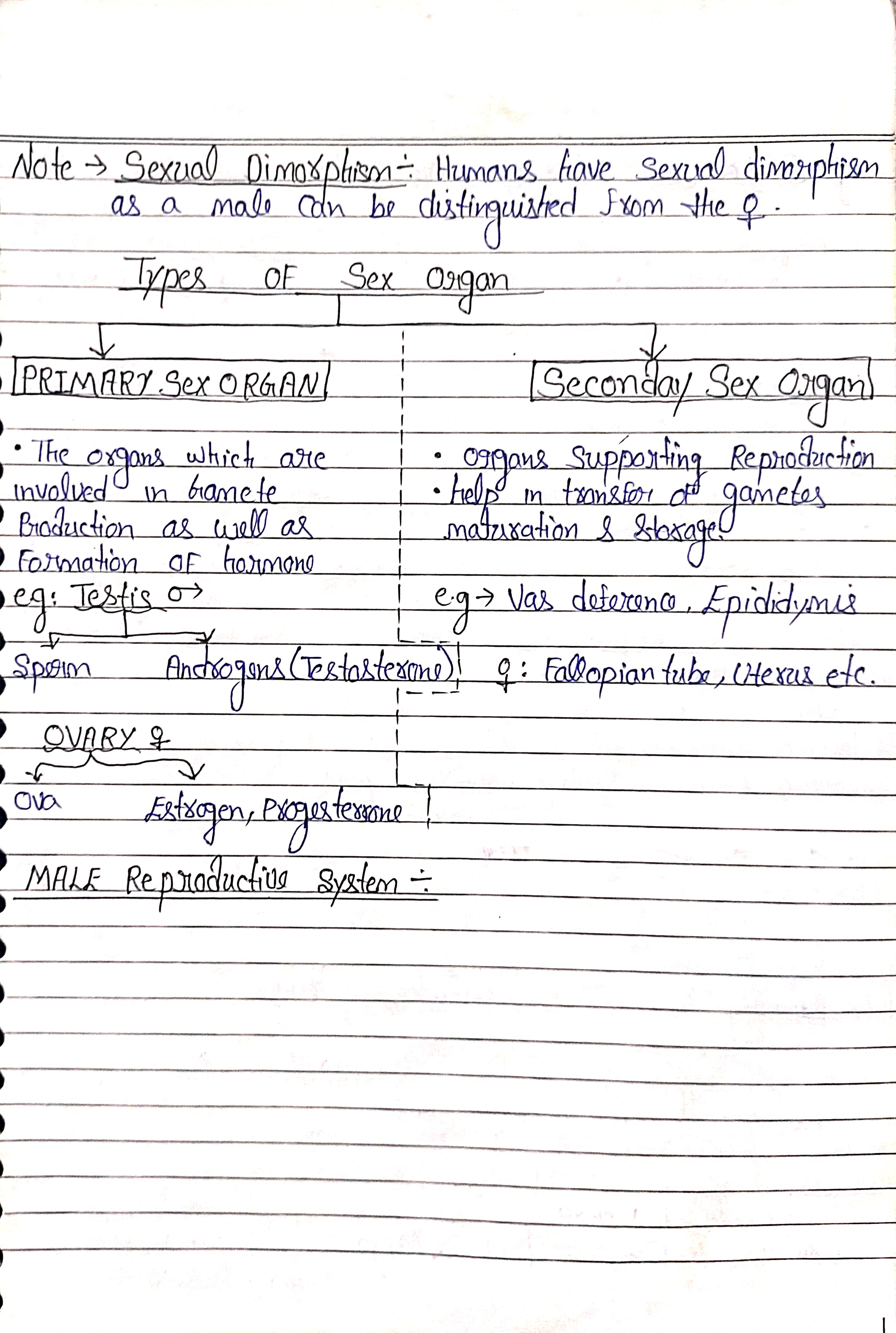
Human Reproduction is a vital chapter for NEET aspirants, covering the processes that ensure continuation of life. It begins with gametogenesis, where spermatogenesis in testes produces sperm and oogenesis in ovaries produces eggs. These processes are tightly regulated by hormones such as GnRH, FSH, and LH, which control the production and maturation of gametes. The male reproductive system includes testes, epididymis, vas deferens, and accessory glands, highlighting the path sperm takes during ejaculation. In females, the ovaries, fallopian tubes, uterus, and mammary glands work in coordination to support ovulation, fertilization, and pregnancy. Fertilization occurs in the fallopian tube when sperm meets egg, forming a zygote that travels to the uterus for implantation into the endometrium. Embryonic development progresses from zygote to blastocyst to fetus, with key milestones such as organogenesis. Finally, parturition (childbirth) involves hormonal regulation by oxytocin and prostaglandins. Diagrams of reproductive organs, menstrual cycle flowcharts, and fertilization stages are crucial for visual memory in NEET preparation.
2. Reproductive Health
Reproductive Health is not only an important academic topic but also critical for real-life awareness. This chapter discusses contraception methods, including natural methods (like calendar and withdrawal), barrier methods (condoms, diaphragms), intrauterine devices (IUDs), and surgical methods such as vasectomy and tubectomy. Each method is explained with its advantages, limitations, and effectiveness. Assisted Reproductive Technologies (ART) such as IVF (In Vitro Fertilization), ZIFT (Zygote Intrafallopian Transfer), and GIFT (Gamete Intrafallopian Transfer) are also covered in detail, showing how infertility can be addressed. Additionally, the chapter covers sexually transmitted diseases (STDs) including HIV, syphilis, gonorrhea, and hepatitis, focusing on prevention, symptoms, and social awareness. Proper understanding of reproductive health concepts helps students answer both theoretical and diagram-based NEET questions efficiently.
3. Human Health and Disease
This chapter deals with the causes of diseases and the body’s defense mechanisms, a high-yield topic for NEET. Students learn about pathogens including bacteria, viruses, fungi, and protozoa, and the diseases they cause such as malaria, typhoid, and influenza. Understanding the immune system is crucial, including innate immunity (first line of defense) and adaptive immunity (specific, acquired response). The mechanisms of antibodies, antigen recognition, and memory cells are discussed with examples. Special emphasis is given to the life cycle of Plasmodium, the parasite causing malaria, because questions often appear in both theory and diagrams. Charts summarizing common diseases, their causative agents, and symptoms make memorization easier. This chapter also encourages NEET aspirants to practice multiple-choice questions (MCQs) for retention.
4. Biotechnology: Principles & Processes
Biotechnology is a technical subject but understanding its basic principles is essential for NEET. This chapter introduces restriction enzymes, often called molecular scissors, which cut DNA at specific sequences for genetic manipulation. Cloning vectors like plasmids (for example, pBR322) are explained as carriers that introduce foreign DNA into host cells. The Polymerase Chain Reaction (PCR) is covered step by step, including denaturation, annealing, and extension, showing how small amounts of DNA can be amplified for experiments. Additionally, techniques such as gel electrophoresis, gene cloning, and recombinant DNA technology are described with simple examples. Diagrams of plasmids, PCR steps, and gene insertion methods enhance conceptual clarity for exam preparation.
5. Biotechnology Applications
The applications of biotechnology demonstrate how science impacts medicine, agriculture, and industry. In medicine, students learn about the production of genetically engineered insulin (Humulin) and vaccines using recombinant DNA technology. In agriculture, concepts like Bt cotton and pest-resistant crops are explained, showing how genetic modification improves crop yield and reduces pesticide use. The chapter also introduces gene therapy approaches, such as correcting ADA deficiency or other genetic disorders. Understanding these applications helps students connect theory with real-world examples, which is often asked in NEET case-based questions. Flowcharts, process diagrams, and step-by-step explanations make this chapter highly examinable.
Why Handwritten Notes Work
- Better visual retention via diagrams
- Flowcharts simplify complex cycles
- Exam-focused language
- Quick revision during final weeks
Who Should Use These Notes
- Class 12 Students
- NEET Aspirants
- Self-study or Droppers
How to Study Effectively
- Active recall and diagram practice
- Cross-reference NCERT for precise terminology
- Solve previous year NEET questions
Frequently Asked Questions
Q1: Are these notes based on the latest NEET syllabus?
Yes, they follow the updated NEET syllabus.
Q2: Can I use them for Class 12 Board exams?
Yes, they are structured for both Board and NEET.
Q3: Do they include diagrams?
Yes, detailed hand-drawn diagrams are included.
Q4: Are these notes free?
Yes, free download on NotesLover.
Q5: Why are handwritten notes better than typed ones?
They improve memory via visual and spatial cues.
Conclusion
Consistent practice and smart revision are key to NEET success. Use these handwritten notes for efficient learning and quick concept mastery. Focus on diagrams, flowcharts, and active recall for maximum retention. Start revising today and move closer to your NEET goal.