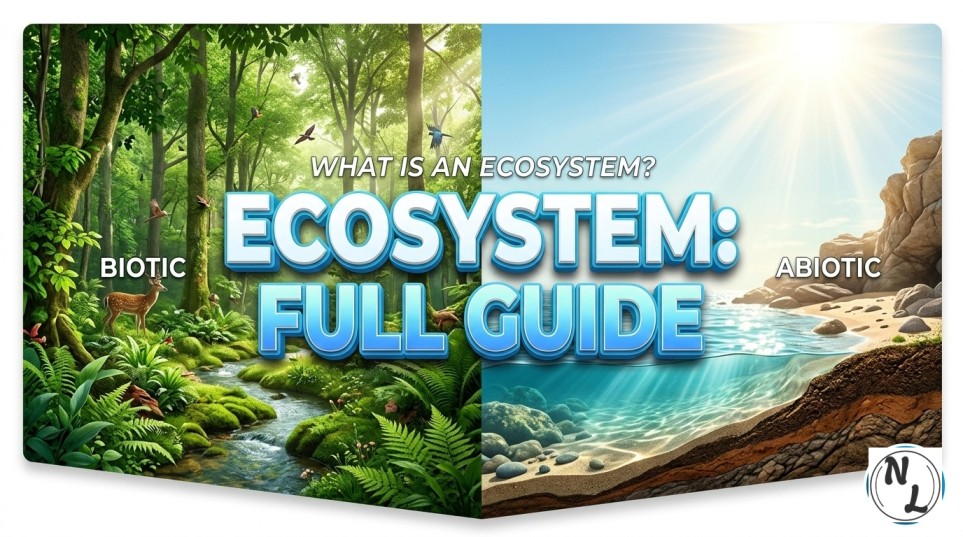
Have you ever wondered how a tiny pond or a massive jungle functions so perfectly? Everything in nature is connected. From the sunlight hitting a leaf to the bacteria breaking down fallen twigs, every element plays a role in a complex, self-sustaining system.
An ecosystem is a geographic area where plants, animals, and other organisms, as well as weather and landscape, work together to form a bubble of life. In simpler terms, it is the functional unit of nature where living organisms interact among themselves and with their physical environment.
Structure of an Ecosystem
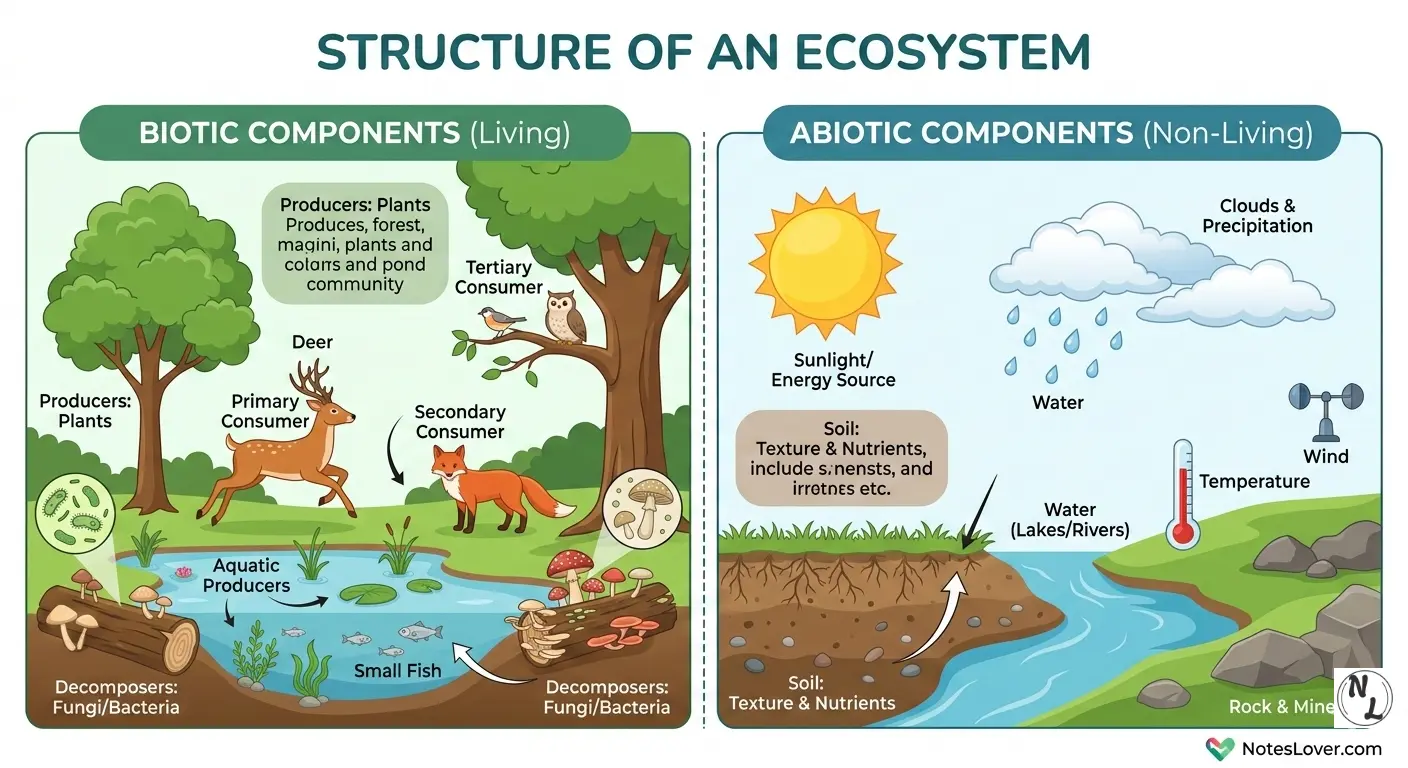
The structure of an ecosystem is characterized by the organization of both living and non-living things. These are broadly categorized into two main components: **Abiotic** and **Biotic**.
These are the non-living chemical and physical parts of the environment that affect living organisms and the functioning of ecosystems.
- Sunlight: The primary source of energy for almost all life on Earth.
- Water: Essential for the survival of all living cells and a habitat for aquatic life.
- Soil: Provides nutrients and minerals to plants and anchors their roots.
- Temperature: Influences the metabolic rates of organisms and determines which species can survive in a specific area.
These include all living organisms present in the environment. Based on how they obtain their food, they are classified into:
- Producers (Autotrophs): Green plants and algae that produce their own food through **photosynthesis**.
- Consumers (Heterotrophs): Organisms that cannot make their own food and rely on plants or other animals. This includes herbivores, carnivores, and omnivores.
- Decomposers (Saprotrophs): Fungi and bacteria that break down dead organic matter, returning vital nutrients to the soil.
Types of Ecosystems
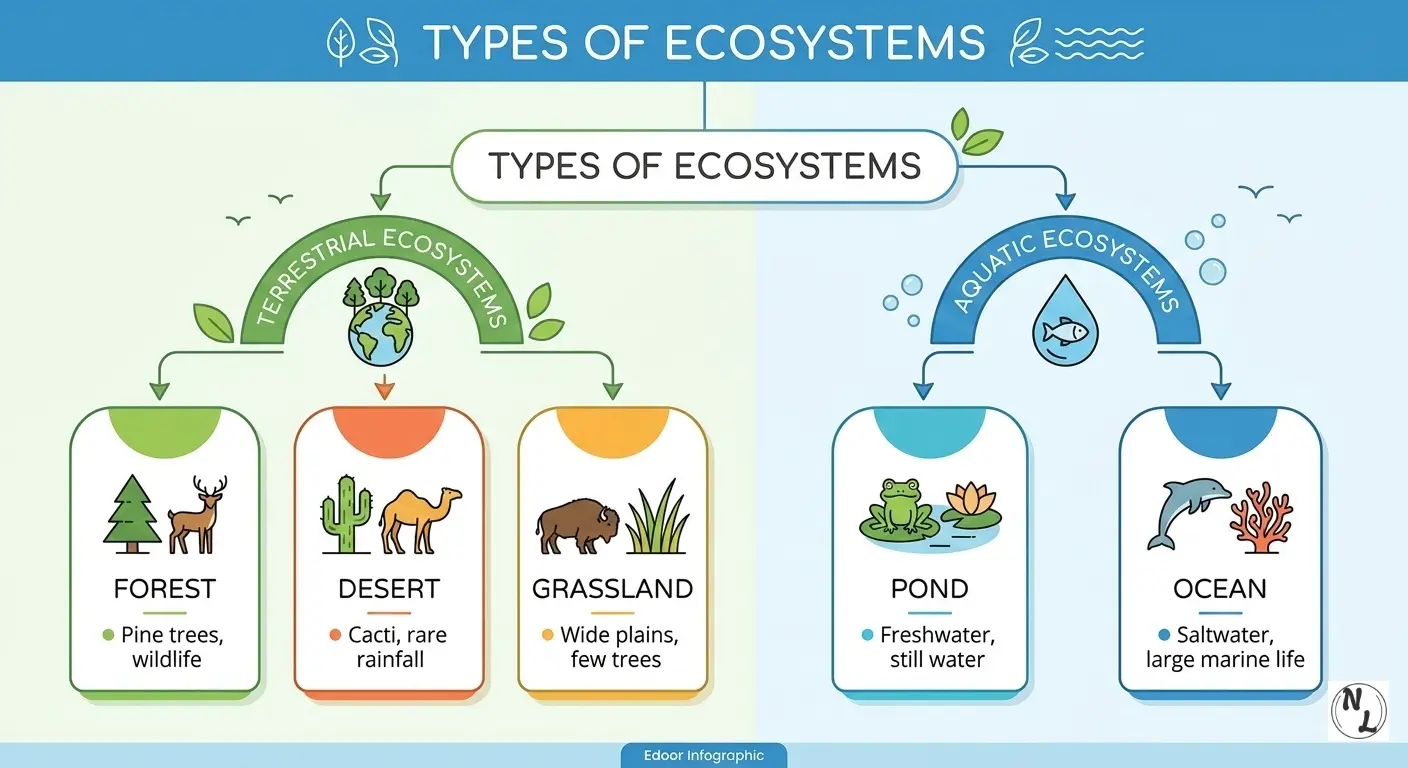
Ecosystems vary greatly in size and location. They are generally divided into two major categories:
These are land-based ecosystems. The most common types include:
- Forest Ecosystem: Densely packed with trees and home to diverse wildlife.
- Grassland Ecosystem: Dominated by grasses rather than large trees or shrubs.
- Desert Ecosystem: Regions with very low rainfall and specialized plants like cacti.
These are ecosystems located in a body of water.
- Freshwater Ecosystem: Includes lakes, rivers, ponds, and wetlands with low salt content.
- Marine Ecosystem: Includes oceans and seas, which have a high salt content and unique biodiversity.
Forest Ecosystem (Special Focus)
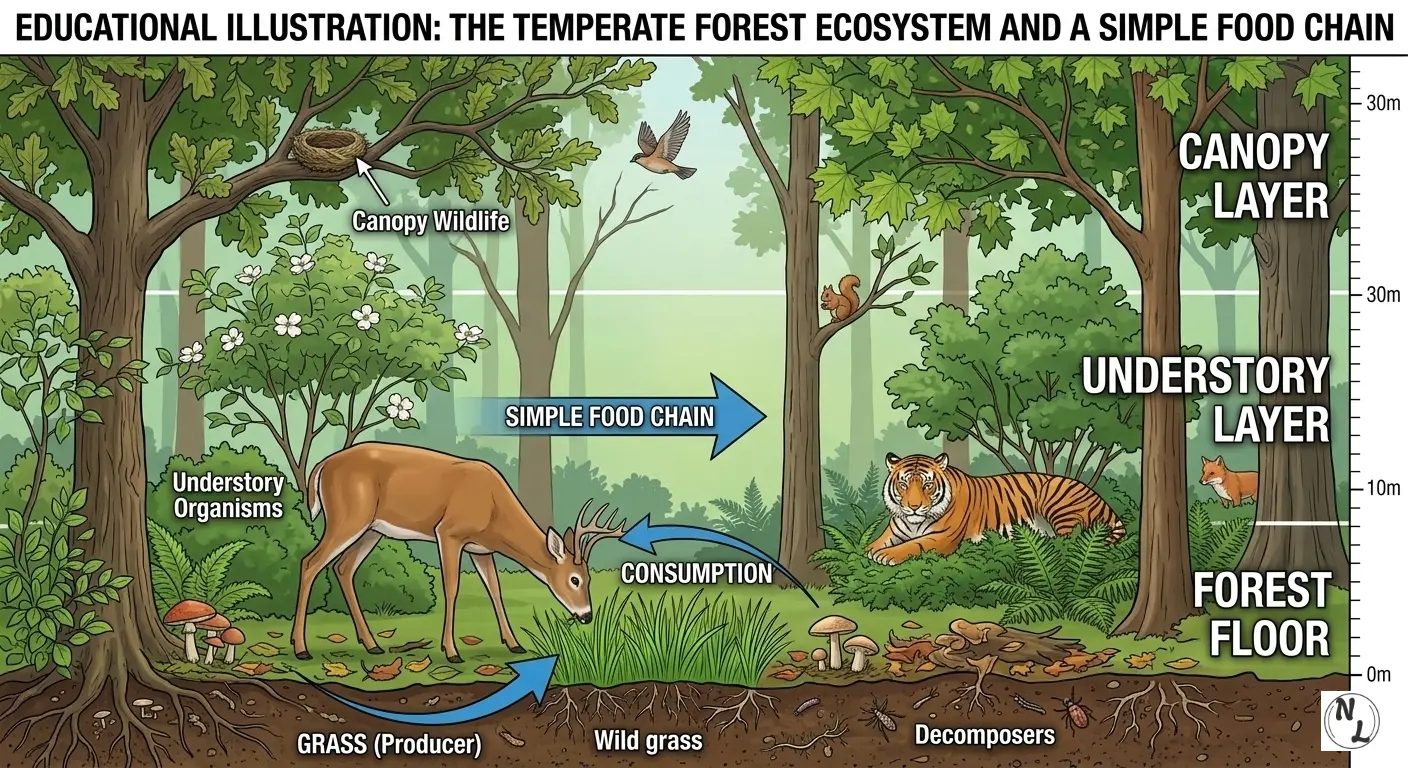
The Forest Ecosystem is one of the most vital terrestrial ecosystems on our planet. It acts as the "Earth's lungs" by absorbing carbon dioxide and releasing oxygen.
- Biodiversity: Forests house over 80% of the world’s terrestrial species.
- Climate Regulation: They help maintain global rainfall patterns and prevent soil erosion.
- Resources: They provide humans with timber, medicinal plants, and various raw materials.
Because forests are complex and rich in nutrients, they support a highly stable food web, making them essential for the planet's ecological balance.
The ecosystem is a delicate web of life where every component-no matter how small-matters. Whether it's a giant Forest Ecosystem or a small backyard pond, the balance between **Biotic and Abiotic components** is what keeps our planet healthy. As students and future leaders, understanding these systems is the first step toward protecting our environment for generations to come.
Frequently Asked Questions (FAQs)
Q1: Who coined the term "Ecosystem"?
The term was first proposed by the British ecologist **A.G. Tansley** in 1935.
Q2: What are the 4 main types of ecosystems?
While there are many sub-categories, the four primary types are often classified as **Terrestrial, Aquatic, Lentic** (still water), and **Lotic** (moving water).
Q3: What is a Food Chain?
A food chain is a linear sequence of organisms through which nutrients and energy pass as one organism eats