Last Updated: Sep 13, 2026
Uploaded By: NotesLover
514 Views
Biology Plant Cell Animal Cell Cell Organelles Difference Between Class 9 Biology Class 11 Biology Cell Structure Cytology Noteslover Physics Educational Notes
Differences Between Plant Cell and Animal Cell: A Comprehensive Guide
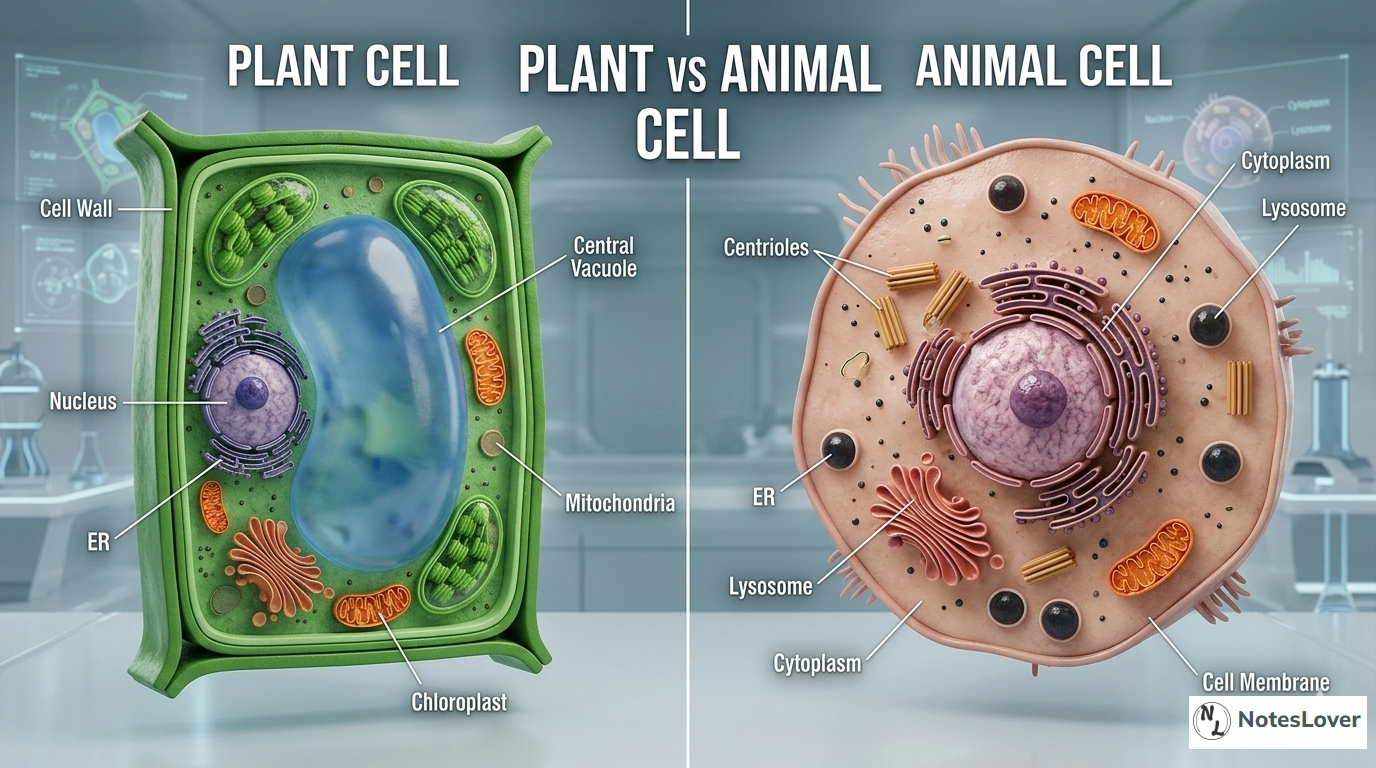
Welcome to Noteslover, your go-to source for easy-to-understand biology notes. Every living organism, from the smallest ant to the tallest tree, is made up of tiny building blocks called cells. While all living cells share some basic features, plant and animal cells have distinct differences that allow them to survive in their specific environments. In this article, we will break down the structural and functional differences between plant and animal cells to help you ace your biology exams.
Definition
A cell is the basic structural and functional unit of life. Both plant and animal cells are eukaryotic cells, meaning they contain a defined nucleus and membrane-bound organelles. However, plants need to make their own food and stay upright without a skeleton, while animals need to move around and find food. These different lifestyles are reflected in the design of their cells.
Structure and Components
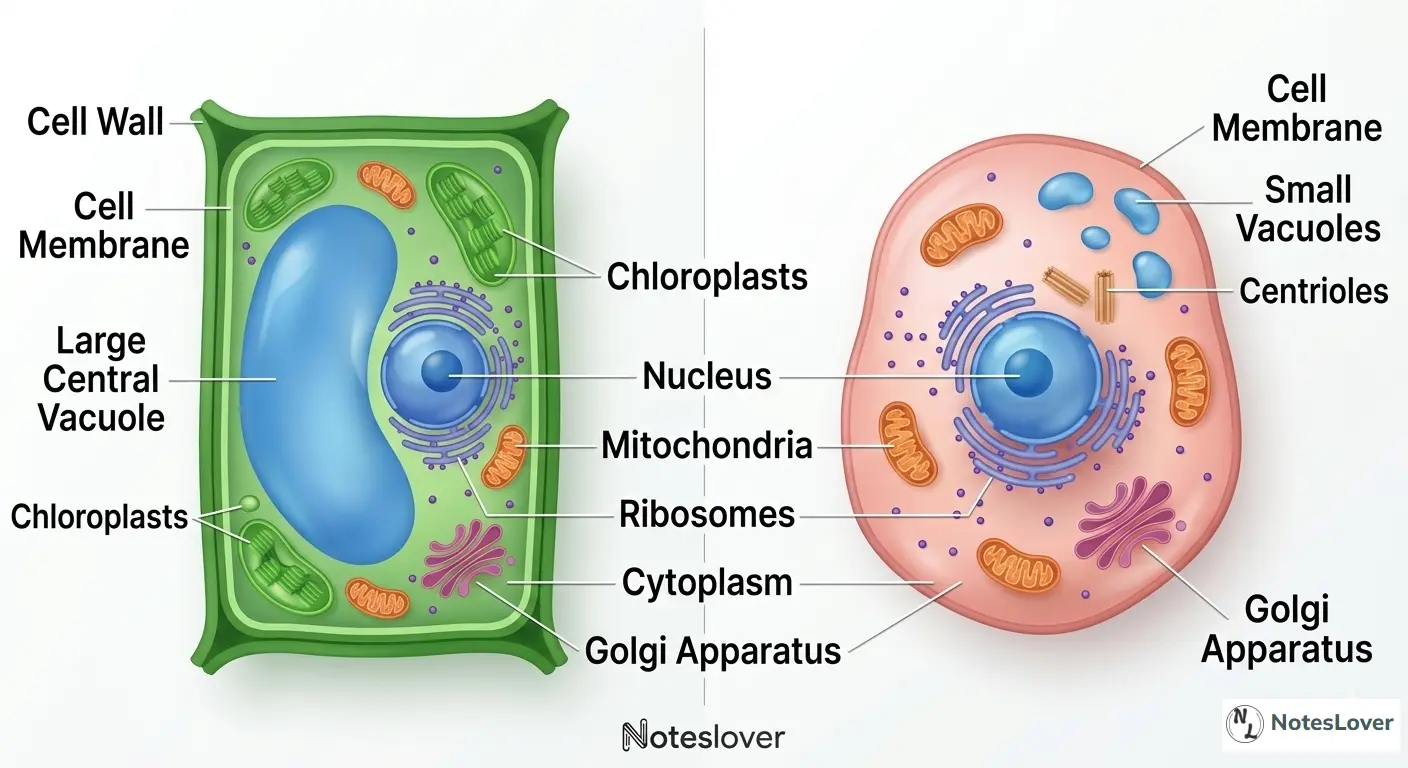
To understand the differences, we must look at the specific organelles found inside these cells. Let’s look at the key components that differentiate them:
1. The Cell Wall
Plant cells have a rigid outer layer called the cell wall made of cellulose. This provides structural support and protection. Animal cells do not have a cell wall; they only have a flexible cell membrane, which allows them to change shape and move.
2. Chloroplasts
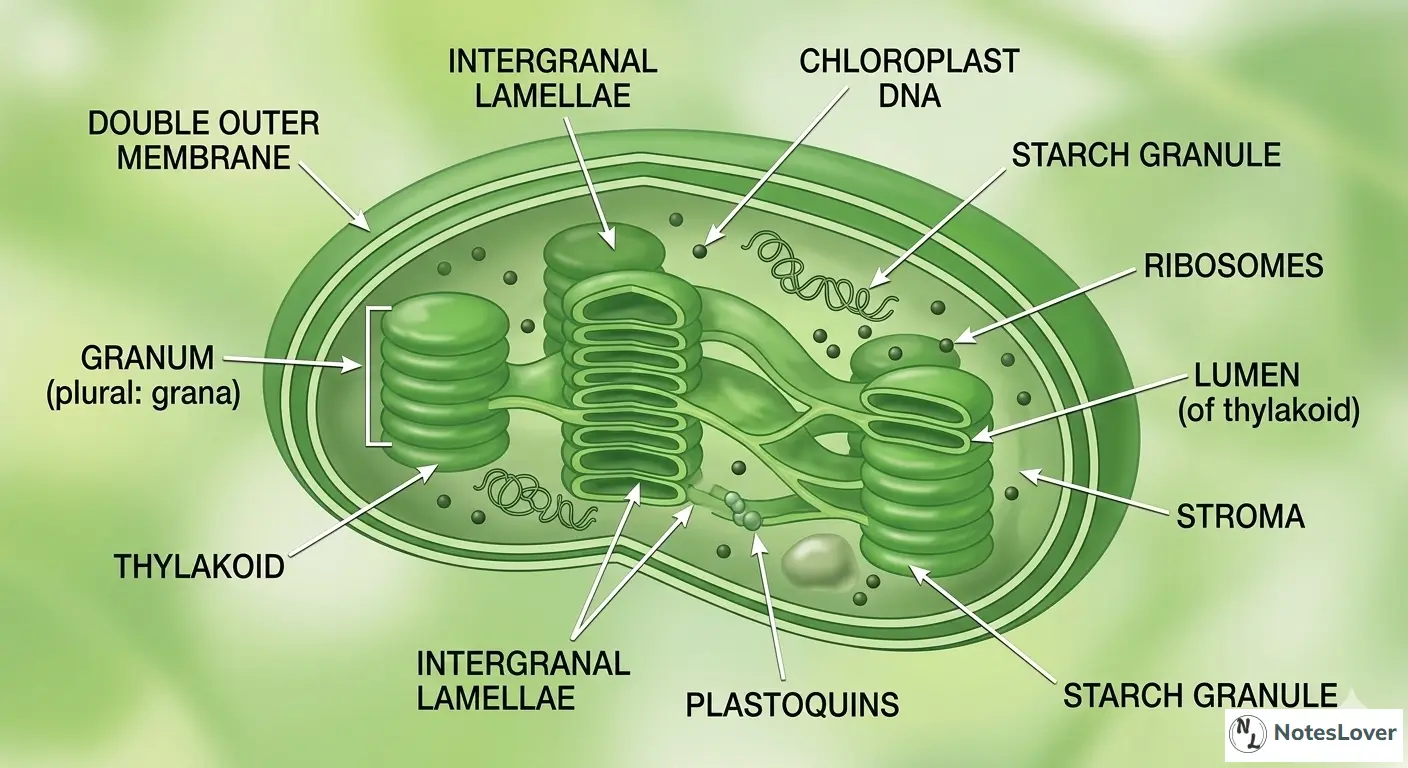
Plants are autotrophs, meaning they make their own food through photosynthesis. For this, they contain chloroplasts (which hold the green pigment chlorophyll). Animal cells are heterotrophs and do not make their own food, so they lack chloroplasts.
3. Vacuoles
Plant cells usually have one very large central vacuole that takes up about 90% of the cell's volume. It stores water and maintains turgor pressure. Animal cells may have small, temporary vacuoles used for storage or transport, but they are much less prominent.
4. Centrioles and Centrosomes
Animal cells have centrioles that help in cell division. While most lower plants have them, they are absent in the cells of higher plants.
5. Shape
Because of the cell wall, plant cells have a fixed, rectangular or cubic shape. Animal cells, lacking a rigid wall, are usually round or irregular in shape.
Uses and Biological Roles
The differences in cell structure directly impact how these organisms function in nature:
- Photosynthesis (Plant Cells): The presence of chloroplasts allows plants to convert sunlight into chemical energy (glucose). This is the foundation of almost all food chains on Earth.
- Mobility (Animal Cells): The lack of a cell wall makes animal cells flexible. This flexibility is essential for muscle contraction and the movement of complex organisms.
- Structural Support: The cell wall and large vacuole in plants work together to keep the plant upright. When a plant is well-watered, the vacuole pushes against the cell wall, making the plant "turgid" (stiff).
Advantages of Specific Cell Features
Each cell type is "optimized" for its lifestyle. Here is a look at the advantages provided by their unique structures:
| Feature | Advantage for Plant Cells | Advantage for Animal Cells |
|---|---|---|
| Cell Wall | Provides strength to grow tall without a skeleton. | Absence allows for fluid movement and specialized shapes (like neurons). |
| Chloroplasts | Allows survival without searching for food. | Not needed; energy is obtained by consuming other organisms. |
| Large Vacuole | Acts as a storage tank for water during droughts. | Smaller size allows for more room for other organelles like mitochondria. |
Comparison Table: Plant Cell vs. Animal Cell
This table summarizes the core differences that you should memorize for your tests.
| Feature | Plant Cell | Animal Cell |
|---|---|---|
| Cell Wall | Present (made of cellulose) | Absent |
| Shape | Fixed, rectangular/square | Irregular or round |
| Chloroplasts | Present | Absent |
| Vacuole | One large central vacuole | One or more small vacuoles |
| Centrioles | Absent (in higher plants) | Present |
| Lysosomes | Rarely present | Present |
| Storage | Stored as Starch | Stored as Glycogen |
Examples in Nature
You can see the results of these cellular differences everywhere:
- Onion Peel Cells: Under a microscope, onion cells look like neat rows of bricks. This "brick" look is due to the rigid cell wall.
- Human Cheek Cells: When viewed under a microscope, cheek cells look like flat, irregular "pancakes." This is because they lack a cell wall and are easily squashed.
- Leaf Cells: These are packed with green chloroplasts, which is why leaves are green and can produce oxygen.
Frequently Asked Questions
Do animal cells have a cell membrane?
Yes, both plant and animal cells have a cell membrane. However, only plant cells have the additional "cell wall" outside the membrane.
Why do plants have such large vacuoles?
Plants can't move to get water when it's dry. The large vacuole allows them to store massive amounts of water and maintain "turgor pressure," which keeps the plant from wilting.
Which cell is larger?
Generally, plant cells are larger than animal cells. Plant cells usually range from 10 to 100 micrometers, while animal cells range from 10 to 30 micrometers.
What is the similarity between them?
Both contain a nucleus, cytoplasm, cell membrane, mitochondria, ribosomes, and endoplasmic reticulum.
Conclusion
Understanding the differences between plant and animal cells is fundamental to biology. The rigid cell wall and chloroplasts in plants reflect their stationary, food-producing nature. In contrast, the flexible membrane and centrioles in animals support a life of movement and consumption. By learning these key distinctions, you gain a deeper appreciation for how life has adapted at the microscopic level.
Check out our related notes on Cell Organelles and their Functions and Cell Division: Mitosis vs. Meiosis for more help with your studies.
Recent Blogs
- Top 200 One Word Substitution (OWS) for SSC CGL, CHSL, CPO, MTS & Other Exams
- Top 200 Antonyms for SSC CGL, CHSL, CPO, MTS & Other Competitive Exams
- Top 200 Synonyms for SSC CGL, CHSL, CPO, MTS & Other Competitive Exams
- Top 200 Idioms for SSC CGL, SSC CHSL, SSC CPO, MTS, and Others with Meanings, Examples & PYQ Practice
- English Grammar Basics: Learn Rules & Sentence Structure
Recent Previous Year Papers
Recent Success Story
- SSC CGL Success Story: Rahul Parik AIR 13 - Complete Journey
- सिद्धार्थ गुप्ता UPPCS सक्सेस स्टोरी – संघर्ष, रणनीति और सफलता की पूरी कहानी
- Shubham Agrawal - SSC CGL Topper Success Story
- UPSC 2025 Top 3 Toppers - Strategy, Preparation & Study Guide
- Shakti Dubey - UPSC CSE 2024 Topper: Journey, Strategies, and Success Secrets
NotesLover
Learn. Download. Grow.
NotesLover HQ, Moradabad, Uttar Pradesh 244001, India
Quick Links
Top Categories
Subscribe
© 2026 Notes Lover. All rights reserved.